
Every year, over 1.5 billion tires reach the end of their life globally, presenting a monumental waste challenge and a hidden resource opportunity. The tire toner production line represents a pinnacle of modern recycling technology, transforming this stubborn waste stream into high-value, super-fine rubber powder. This advanced powder is a critical raw material not only for toner but for a vast array of industrial and consumer products. This deep dive explores the sophisticated journey from whole tire to premium powder, revealing the engineering marvels and significant environmental benefits at each stage.
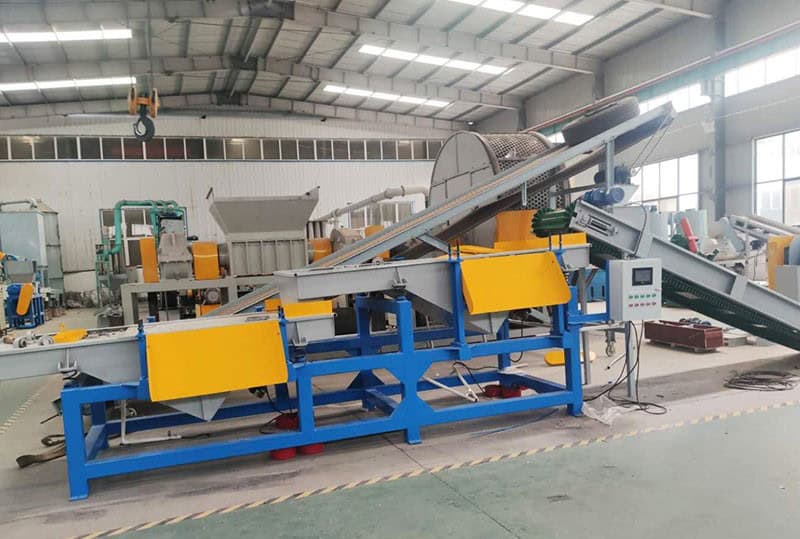
The Critical First Step: Tire Preparation and Bead Removal
The transformation begins not with shredding, but with precise surgical preparation. Whole tires, with their complex structure of rubber, fabric, and steel, require careful disassembly.
The Tire Bead Cutting Machine acts as the system’s scalpel. Its role is often underestimated but is crucial for protecting downstream equipment. The bead—the rigid, steel-reinforced rim of the tire—is extremely tough. This machine uses high-pressure hydraulic cutters or rotating blades to cleanly sever the bead from the tire’s sidewall. By removing this hardened component first, the line prevents catastrophic damage to shredders and grinders, ensuring operational efficiency and reducing maintenance costs. This step separates the problem (the steel bead) from the valuable resource (the rubber body).
Video demonstration
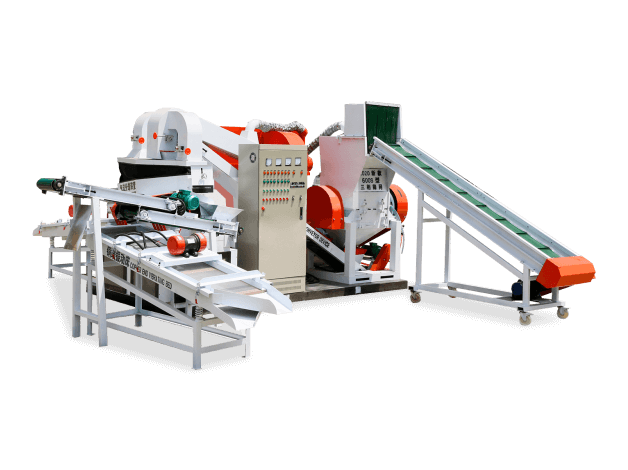
The Bead Wire Separator then tackles the extracted bead. Its mission is pure material liberation. Using a combination of powerful crushing, shearing, and vibratory separation processes, this machine forcefully divorces the high-tensile steel wire from its surrounding rubber. The output is two clean material streams: bundles of recycled steel, ready for smelting, and coarse rubber chunks. This thorough separation is vital for producing a pure rubber powder, free from metallic contaminants that would compromise quality in applications like toner or athletic surfaces.
Size Reduction: From Bulky Tires to Refined Granules
With steel removed, the rubber-rich tire carcasses embark on a multi-stage reduction process.
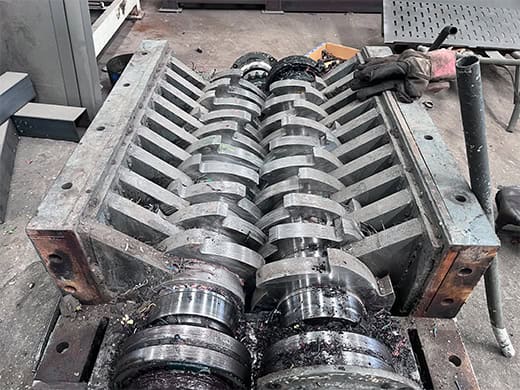
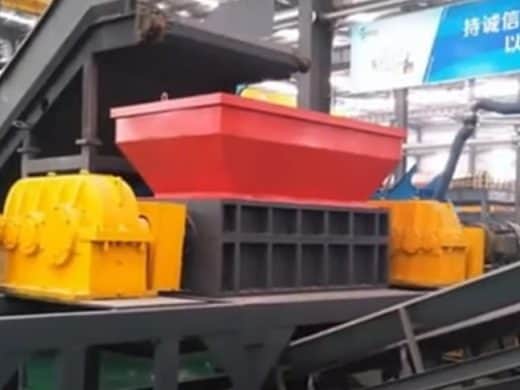
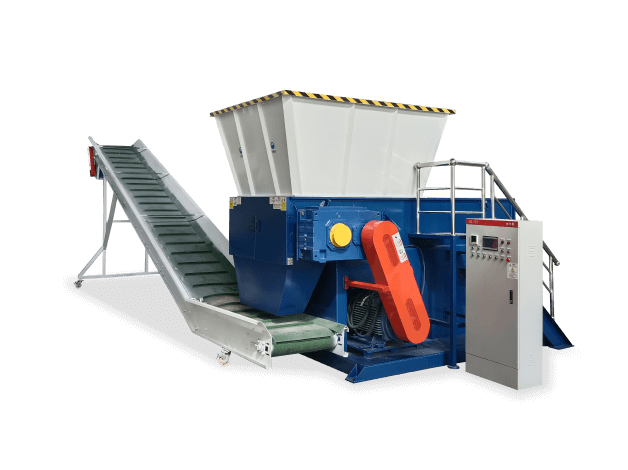
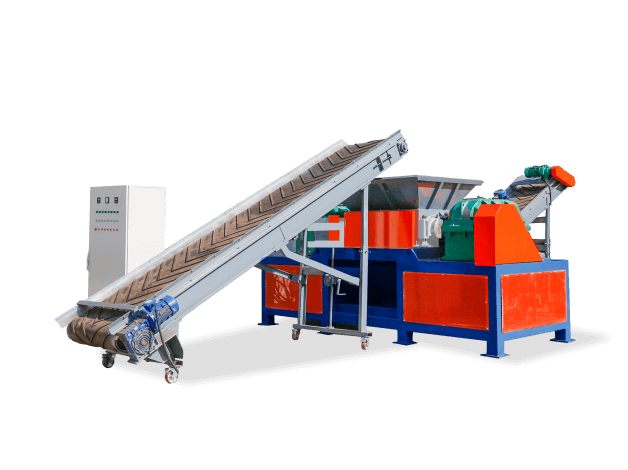
The Primary Tire Shredder is the workhorse of size reduction. These machines, often featuring dual-shaft configurations with hydraulically driven, intermeshing cutters, are built for brute force and reliability. They ingest whole tire sections and tear them into rough rubber chips, typically 2-4 inches (50-100mm) in size. This stage is about volume reduction and preparing a consistent feed for finer grinding. Modern shredders are engineered for low-speed, high-torque operation, minimizing heat generation (which can degrade rubber quality) and energy consumption while maximizing throughput.
Secondary Granulation often follows. Here, the chips are processed further into smaller, more uniform pieces or “granules,” often around ½ inch (10-20mm). This creates a homogenous feed material that allows the final grinding stage to operate at peak efficiency and consistency.
The Heart of the Process: Fine Grinding into Premium Powder
The journey from granule to fine powder is where precision engineering takes center stage. This stage defines the final product’s value.
The Heavy-Duty Rubber Mill, often a high-shear grinding system, is the core of this phase. It operates on the principle of repeated impact, shear, and attrition. Two main technologies dominate:
- Cryogenic Grinding: Rubber granules are cooled using liquid nitrogen to below their glass transition temperature (around -80°C). In this brittle state, they are easily fractured in a hammer mill into a fine, smooth powder with well-preserved polymer chains. This method is excellent for producing very fine powder (below 100 mesh) with minimal heat.
- Ambient Grinding: Granules are ground at room temperature using a series of progressively finer mills or a high-shear rotor-stator system. This method generates more heat, requiring sophisticated cooling, but is highly effective for a wide range of mesh sizes. The finest ambient systems can produce powder up to 200 mesh or finer, suitable for toner applications.
- Classification and Screening is the final quality gate. The ground powder is pneumatically conveyed through vibrating screens or air classifiers. This step meticulously separates particles by size, ensuring the final product batch meets exacting specifications. Oversized particles are recycled back to the grinder, while correctly sized powder is collected. For toner-grade powder, this classification process is exceptionally precise, often requiring multi-stage, ultrasonic, or turbo air classification to achieve a perfectly narrow particle size distribution.
Conclusion: A Model of Sustainable Innovation
The modern tire-to-toner production line is a testament to human ingenuity in solving environmental challenges. It is a sophisticated, integrated system that combines mechanical force, precision separation, and fine material science. From the initial cut of the bead cutter to the final classification of micron-grade powder, each stage is optimized for maximum recovery, purity, and value creation. This technology does not merely recycle; it upcycles, giving end-of-life tires a new, high-value purpose and driving us toward a more sustainable and resource-efficient future.